
I grew up in St. Petersburg, on Florida’s Gulf Coast. We couldn’t quite see rocket launches from our backyard, but we’d pile into the car and drive over to the Cape whenever something big was going up. Summers were steamy, the frogs were loud, and weekend adventures meant beaches, springs, or a quick trip to Orlando.
I went to UCF for college, then like a lot of young Floridians, I left—for new places, new experiences, and eventually, a new life in Spain. But I still come back. I’ve spent months at a time living here again as an adult, and Florida is woven into everything I am.

There’s a lot to love: the nature, the laid-back lifestyle, the weird charm of it all. But living here full-time? It’s not all sunshine and sandy toes.
Florida is a land of contradictions. It’s sunny and swampy. Friendly and frustrating. Affordable and absurdly expensive. It’s paradise—until it’s not.
So here’s my honest, firsthand look at what it’s really like to live in Florida. The pros. The cons. The quirks. Whether you’re considering a move, planning a snowbird escape, or just curious what day-to-day life is really like—this is for you.
🌦️ Weather, Nature & Outdoor Living
Florida was my first home, and I still return year after year—drawn by the sunshine, the sea breezes, and the simple joy of backyard mango trees. But even paradise has its pests.
Pro: You’ll get sunshine almost every day.
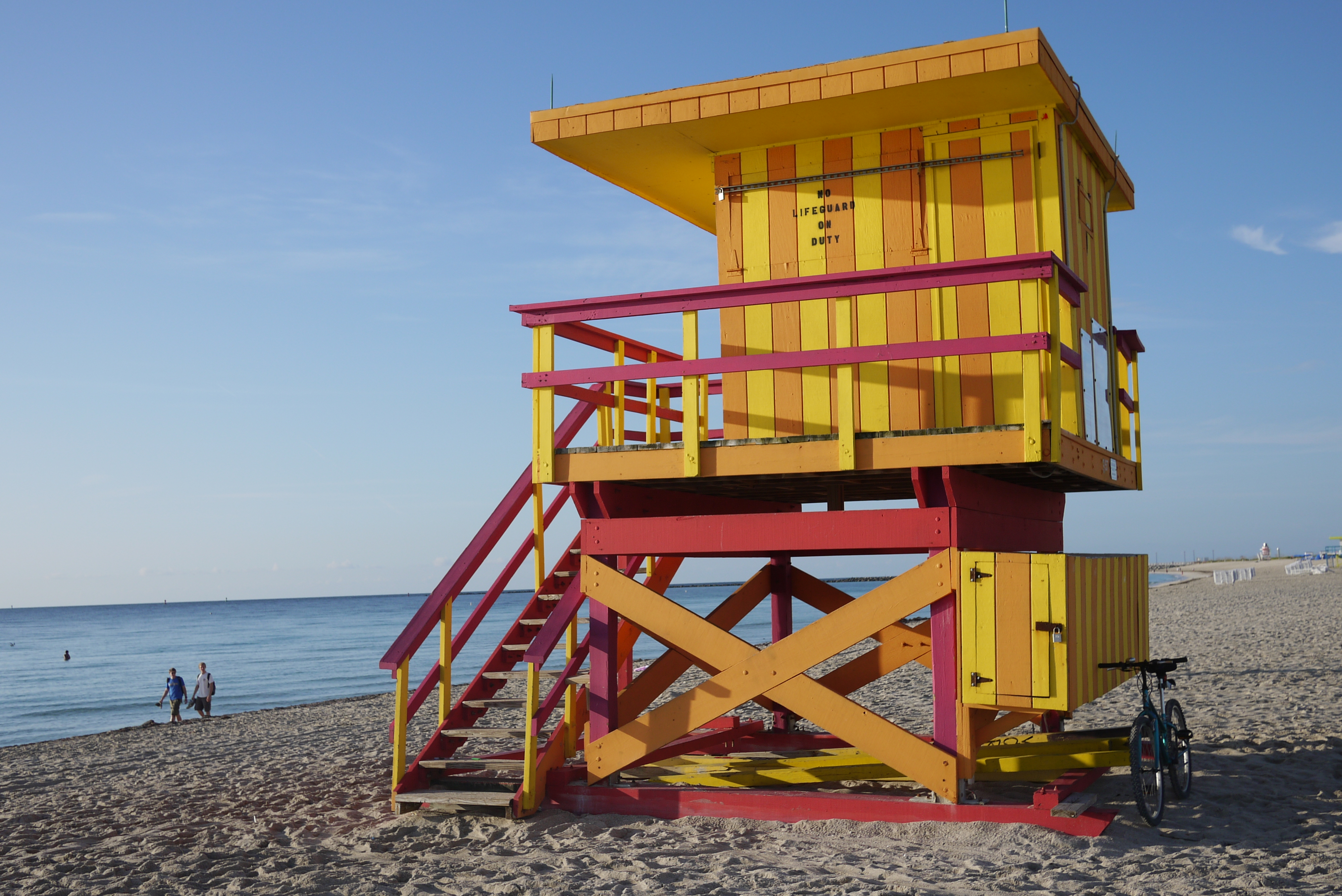
They don’t call it the Sunshine State for nothing. With more than 230 sunny days a year, Florida gives you permission to wear flip-flops in January and skip seasonal depression entirely. Even when I lived abroad, I missed that golden, vitamin-D-drenched glow.
Pro: The beach is never far.

I’ve always lived on the Gulf side (which is obviously the better side). The sunsets are spectacular, the water is swimmable most of the year, and within two hours you can hit nearly any coast. If you like calmer waters, the Gulf is your jam. Prefer surfing? The Atlantic’s got you covered.
Con: The humidity in August is enough to wilt even the hardiest resident.

August in Florida feels like breathing through a wet towel. Humidity hits 90%, heat indexes top 100°F, and stepping outside means instantly sweating through your clothes. It’s brutal. Air conditioning is essential—and expensive.
Pro: Florida’s citrus (and backyard produce) is unbeatable.

Let’s be honest: Florida grows the best citrus in the U.S.—maybe the world. The oranges? Sweet, juicy, and exploding with flavor. Once you’ve tasted a Florida orange straight from the tree, California’s just won’t cut it.
And it’s not just oranges. Lemons, limes, grapefruits—if you’re a citrus fan, this state is heaven.
But the produce perks don’t stop there. Florida’s climate means you can grow year-round. My dad’s average-sized yard in Clearwater bursts with mangoes, papayas, tomatoes, basil, and more. He’s even tried macadamia and coffee plants. It’s like a DIY grocery store if you’ve got the right soil and a green thumb.
Local farmer’s markets, roadside fruit stands, and neighborhood swaps are common. And if you time it right, you can hit the Strawberry Festival in Plant City each spring—equal parts county fair and fruit celebration.
Fresh, local, and often straight from your backyard: that’s one of the quieter joys of Florida life.
Con: Climate change is turning up the volume.

I’ve lived through more hurricanes than I can count—Andrew, Charley, Frances, Ivan, Jeanne—and they’re only getting stronger. Rising sea levels, storm surges, tornadoes, and flooding are just facts of life here now. You either prep your hurricane kit… or move inland.

Pro: The nature is unforgettable—coral reefs, manatees, springs & skydives.

From moss-draped forests to neon coral reefs, Florida doesn’t make you choose between adrenaline and awe. You can have both.
Some of my favorite memories growing up involve kayaking past manatees on the Weeki Wachee River with my dad, or boating in a tiny “gheenoe” to Hospital Hole—a spring-fed sinkhole where manatees love to gather in winter. One time, my Aussie friend and I road-tripped all the way to Key West just so I could show him my favorite snorkeling spot. We ended up dodging fire coral and spotting a sea turtle.

And if water’s not your thing? Florida still delivers. Skydiving over the Space Coast, airboating through the Everglades, biking long stretches of flat, scenic terrain, or hiking under a jungle canopy in Ocala—all of it is at your fingertips. Even my dog has paddled the Anclote River (in a life vest, of course—we don’t mess around with gators).

More than 27% of Florida’s land is protected as national or state parks, and the state is home to over 5% of the world’s biodiversity. That’s wild.
Con: Roaches, mosquitos, and gators—oh my.

Let’s not sugarcoat this.
- Alligators? They’re just part of life. If there’s water, there might be one. You learn to scan the banks, keep pets leashed, and never swim in lakes with “No Swimming” signs.
- Roaches are a Florida rite of passage. Yes, they fly. Yes, they sneak into even the cleanest homes. And no, you’ll never fully get used to them.
- Mosquitos are relentless. Bug spray is non-negotiable for outdoor evenings. I have toddler heat-rash war stories to prove it.
The house I grew up in didn’t have central heat and air, which means it was a lot more open to the elements than many homes—I still shudder at memories of late-night bathroom trips where I discovered a roach sitting on the toilet seat. 😱
🧑⚕️ Healthcare, Education & Quality of Life

Pro: Florida boasts world-class hospitals.
Florida is home to some of the best hospitals in the U.S., a major draw for residents of all ages. Notably, Johns Hopkins All Children’s Hospital in St. Petersburg is nationally ranked for pediatric care—and it saved my niece’s life when she had a rare medical emergency at just six months old.
Other standouts include the Mayo Clinic in Jacksonville and the Cleveland Clinic in Weston, both of which are nationally recognized for excellence. And because of Florida’s large senior population, you’ll find an abundance of geriatric specialists and aging-focused care, particularly in retirement hubs like The Villages, Naples, and Sarasota.
Con: Healthcare outcomes vary—and race matters.
Florida consistently ranks in the bottom tier for healthcare equity. According to the Commonwealth Fund, Florida is 45th out of 50 for racial and ethnic equity in health outcomes. Black mothers in Florida are more than three times as likely to die from pregnancy-related complications compared to white women.
Add to that rising healthcare costs—the average Floridian spends over $8,200/year on healthcare—and you’ll understand why, while high-quality care exists, it’s not evenly accessible to everyone.
As a white woman with good insurance, I’ve received great care. But if I were moving to Florida as a person of color, I’d want to understand the full picture and research local providers in depth.

Pro: Florida’s university system is top-tier.
Call me biased—I graduated from the University of Central Florida—but Florida’s State University System ranks among the best in the country. UCF is one of the largest and fastest-growing public universities in the U.S., and it was a great place to learn and grow.
The state’s 12 public universities—including UF, FSU, and USF—offer strong programs in STEM, business, and the liberal arts. On the private side, schools like Rollins College, University of Miami, and Stetson University offer smaller class sizes and a more intimate educational experience.
Con: K–12 education is uneven and increasingly politicized.
Florida has made major improvements in public education, ranking 14th in the nation for PreK–12 education according to U.S. News & World Report (2023). But that ranking masks growing disparities.
The expansion of charter schools and school vouchers is controversial—while it increases choice, critics argue it diverts funding away from traditional public schools. And recent waves of book bans and curriculum censorship in some districts have raised concerns about academic freedom.
When I was in high school, Florida’s system ranked near the bottom. While things have improved, I still don’t plan to send my son to public school here—Spain’s education system aligns more closely with my values.
Pro: Bright Futures is a fantastic scholarship program.

Florida’s Bright Futures Scholarship helped me and my best friend attend UCF tuition-free. Funded by the state lottery, the program rewards high-performing Florida high school students with up to 100% tuition coverage at public universities.
There are multiple award tiers (75% and 100%), and it’s a real reason to stick around for in-state college if your teen is a strong student. I got my degree without debt thanks to Bright Futures and the International Baccalaureate program at St. Pete High.
🏘️ Affordability, Jobs & Economy
Pro: Florida has no state income tax—and that’s a big deal
I run my business out of Florida, and one of the state’s biggest perks is that you won’t pay a cent in state income tax. For freelancers, retirees, and small business owners, this can mean significant savings over time.
While corporations do pay state tax, LLCs, sole proprietorships, and S-corps are exempt, making Florida one of the most attractive places to incorporate a business in the U.S.

Con: But sales tax makes everything more expensive
Of course, that money has to come from somewhere. Florida relies heavily on a 6% statewide sales tax, with many counties tacking on a local surcharge (7% in places like St. Pete and Miami).
Groceries are partly exempt, but prepared foods and essentials like toiletries, cleaning supplies, and kids’ clothing often are not. It adds up—especially for families. Large purchases like cars and electronics can sting with hundreds of dollars in additional tax.
Pro: Cost of living is mid-range nationally.

For a state where you can boat on your birthday in a t-shirt in late December, Florida’s overall cost of living hovers right around the U.S. average. Thanks to no state income tax and affordable housing options inland, it’s more manageable than New York or California.
Here’s how Florida compares on key financial metrics (2023 data):
| State | Cost of Living Index | Median Home Price | State Income Tax |
|---|---|---|---|
| Florida | 99.5 | $315,000 | No |
| California | 149.9 | $654,000 | Yes |
| New York | 135.6 | $342,000 | Yes |
| Texas | 91.2 | $279,000 | No |
| Arizona | 97.7 | $332,000 | Yes |
Data was pulled from the Missouri Economic Research Center and Zillow.
Con: The affordability gap is widening
In just a few years, I’ve watched grocery bills skyrocket when I return from Spain. Housing prices are up dramatically since the pandemic—especially in popular areas like Naples, Miami, and Tampa Bay.
Add in sky-high property taxes, limited housing inventory, and record-breaking home insurance premiums, and affordability becomes a moving target.
Flood insurance is another concern. Some insurers have exited Florida entirely, making policies hard to find and expensive—especially near the water. We’ve always opted to haul our boat to a ramp instead of living directly on the water (and paying for that view in every way imaginable).

Pro: Florida’s job market is strong
Florida’s economy is booming across sectors: tourism, aerospace, finance, logistics, and especially healthcare. As of late 2023, the state’s unemployment rate was 2.7%, well below the national average.
Because the population is growing rapidly, demand for housing, services, and healthcare is high, which translates to consistent job creation—especially in urban centers like Orlando, Tampa, and Jacksonville.

Con: Minimum wage hasn’t kept up
Even with a phased plan to reach $15/hour by 2026, Florida’s current minimum wage of $12/hour (2024) is well below what it takes to live comfortably, especially in high-cost counties.
According to MIT’s Living Wage Calculator:
- A single adult in Pinellas County needs (my hometown): $18.08/hr
- A family of four (2 working adults, 2 kids) needs: $26.28/hr
In other words, working full-time at minimum wage doesn’t cover basic expenses, even in affordable areas.
🚗 Getting Around
Pro: Roads are smooth, highways are fast, and it’s easy to road-trip

Florida is a state made for drivers. The major highways—like I-75 and I-95—are wide, well-maintained, and connect all corners of the state. Want to head from St. Pete to the Atlantic coast? You’ll find fast, accessible toll roads and highway routes that make it possible to drive coast-to-coast in under four hours.
Even during Florida’s peak tourist seasons, outside of major cities, you’ll find traffic relatively manageable. And if you’re looking to explore the state’s diversity—kayaking springs in Ocala one weekend, eating Haitian food in Miami the next—Florida makes it easy to roam.
Con: But public transportation is basically non-existent
This is a car-dependent state, full stop. If you’re coming from a country or U.S. city with reliable subways or buses, Florida will likely frustrate the hell out of you.
Yes, major cities have buses, but they’re sparse and unreliable. Commuter rail? Only a couple of cities offer it (like the Tri-Rail between Miami and West Palm), and it rarely covers where you actually need to go. Even Amtrak—which I’ve taken between Tampa and Orlando—only works if someone can drop you off and pick you up at either end.
And biking? Florida has bike lanes, sure, but many drivers act like they don’t exist. It’s just not a safe or viable everyday alternative in most areas.
I’ve lived in Mexico, Thailand, and now Spain—all countries where I could get around without owning a car. In Florida? You’ll need one. Full stop.

Con: Florida’s cities are bursting at the seams
Even if the roads are well-paved, they’re often packed. Florida’s rapid population growth means the cities feel increasingly crowded, with traffic jams and congestion during morning and evening commutes—especially in places like Miami, Orlando, and Tampa.
And it’s not just cars—public spaces get crowded too. Beaches, theme parks, rivers, and even your neighborhood Target can feel like a madhouse during peak season. As a lifelong Floridian, I’ve learned to avoid certain areas entirely during spring break and Christmas holidays.
🍽️ Food, Culture & Community

Pro: Florida is one of the most culturally diverse states in the U.S.
From Cuban bakeries in Miami to Greek diners in Tarpon Springs, Florida is a melting pot of global cultures—and that richness shows up in the food, festivals, and community fabric across the state.
Miami’s vibrant Latin American and Caribbean culture is well known, but towns like Tarpon Springs, with its historic Greek community and sponge-diving industry, or Pensacola, with its Southern-Gothic charm, also offer unique cultural pockets. Key West may be tiny, but its quirky island culture is unmatched—and a weekend there never disappoints.
Pro: That diversity means incredible food—from street eats to fine dining.

Florida’s culinary scene is a direct reflection of its people. You’ll find freshly caught seafood on the Gulf, slow-boiled peanuts at roadside stands, and some of the best key lime pie in the country (my vote goes to Blue Heaven in Key West).
While I’ve been a vegetarian for years, I still remember the joy of fresh grouper sandwiches near the beach as a kid. And thanks to my love of Florida’s food scene, I know exactly where to send visitors for standout Cuban coffee, conch fritters, or Greek baklava.
Pro: Florida excels at the theme park game.

Living in Florida gives you insider access to the state’s most iconic attractions—at a discount. As a local, you can get reduced tickets and annual passes to Disney, Universal, and Busch Gardens. When I was in college, I had a Universal pass and went nearly every week.
Beyond the big-name parks, there are offbeat gems like Weeki Wachee Springs (mermaids!) and Dinosaur World, which my nephew adored. And don’t sleep on the Epcot International Food & Wine Festival—it’s a cultural tasting tour without leaving the state.
Pro: Sports fans have plenty to cheer for.
Baseball, football, NASCAR, golf—Florida does it all. You’ve got three NFL teams, spring training camps, major college rivalries, and PGA events. As a UCF alum, I lived the underdog sports life, but I was also swept up in Gator madness when visiting friends in Gainesville.
Whether you’re into tailgating or just watching the Daytona 500 from home, Florida’s sports culture is lively and inclusive.
Pro: You’ll save money on clothes and shoes.

I know it’s a weird “pro,” but it’s true: Living in Florida means you don’t need a seasonal wardrobe. No snow boots, parkas, or $200 coats. A few bathing suits, breathable fabrics, and sandals will get you through nearly every day of the year. Bonus: There’s probably an outlet mall within 20 minutes of your house.

Pro: Cultural landmarks and museums add texture to daily life.
Florida isn’t just theme parks and beaches. I grew up visiting the Salvador Dalí Museum in St. Pete, and watching shuttle launches from Cape Canaveral. From Hemingway’s home in Key West to the Kennedy Space Center to historic St. Augustine, the state’s cultural footprint is broader than people expect—and deeply worth exploring.

Con: Tourists swarm the state year-round.
One of the biggest drawbacks to living in Florida is the constant influx of tourists. With beautiful beaches, world-renowned theme parks, and warm weather year-round, it’s no wonder millions visit each year—but it comes at a cost.
Crowds, traffic, and long lines are an unavoidable part of life here, especially in major hubs like Orlando, Tampa, and Miami. And when peak tourist season hits, even locals can feel like visitors in their own town.
Beyond the inconvenience, the environmental toll is real—beach pollution, overdevelopment, and pressure on local wildlife are constant concerns in high-tourism zones.

Con: Crime is a reality in many areas.
Florida’s overall crime rate is higher than average, with property crimes and vehicle theft particularly common in urban areas. Stand Your Ground laws and open carry policies have added a layer of unease to everyday life in some communities.
That said, crime varies dramatically by location. Some neighborhoods feel incredibly safe, while others require more vigilance. Research is critical when choosing where to live.

Con: Florida was a flashpoint in the opioid epidemic.
This one’s personal. I lost one brother to the first wave of prescription opioids, and another to the fentanyl crisis more recently. Florida was ground zero for the pill mill era, and while progress has been made, the fallout continues.
It’s not unique to Florida anymore—but if you’re raising kids, you should know this history. It shapes the landscape in ways that still matter today.
Con: The polarization of politics in the state is unsustainable

Florida’s political climate has become sharply polarized in recent years, reflecting national trends—but with its own intensity.
No matter where you lean, the state has become a battleground for divisive legislation around guns, abortion, and education. The tension isn’t limited to government buildings—it shows up in friend groups, school board meetings, and casual conversations that turn heated fast.
I’ve felt this shift each time I return home. It’s harder to have nuanced conversations, and even long-time friendships feel the strain. For many, the politics don’t just shape policy—they shape the day-to-day experience of living here.

🧭 The Big Decision
Why I Moved to Spain to Raise My Son

Florida will always be home—it’s where I was born and raised. But it wasn’t where I wanted to raise my son.
Like Florida, Spain has hundreds of miles of coastline, dotted with charming towns and beautiful beaches. The difference? In Spain, it’s still possible to live near the beach without draining your savings. Affordable coastal living is a reality here, not a pipe dream.
Healthcare was the tipping point for me. In Florida, insurance premiums and out-of-pocket costs added up to more than a mortgage payment. In Spain, I pay around $300/month for a private plan with zero deductible—something I couldn’t dream of accessing back home. It gives me peace of mind and frees up resources for the kind of life I want to live with my son.
Then there’s the constant background hum of gun violence. Florida, like much of the U.S., carries a daily undercurrent of risk that’s impossible to ignore as a parent. I didn’t want that to be our normal.
Spain offers something different: a slower pace of life, robust public services, and a cultural emphasis on family. Free daycare, excellent public healthcare, and reliable public transit aren’t fringe benefits here—they’re the norm. That structure has allowed me to work less and parent more, without sacrificing financial stability.
I love Florida. But when I looked at what I needed to thrive as a single mom, Spain won out.

Why I Still Live in Florida Part-Time
All that said, the decision isn’t black and white.
I still spend a few months each year in Florida—usually winter into spring—to be near my family. That connection matters more than sunshine or cost of living. My dad’s in St. Pete. My childhood friends are raising kids of their own. When I’m back, we take the boat out on the rivers, eat fresh strawberries in Plant City, and chase manatees down the Weeki Wachee. It’s not perfect, but it’s mine.
Florida is familiar. It’s the place where I know every street, where the smell of salt air after a summer storm still stirs something in me. And for many people, it’s still a beautiful, exciting, life-giving place to live.
But for me, the pros no longer outweighed the cons full-time. That’s why I chose a hybrid life. One that allows me to tap into the best of both places.
Frequently Asked Questions

What are the financial benefits of living in Florida?
One of the biggest financial perks of living in Florida is that there’s no state income tax. That means you get to keep more of your paycheck compared to residents of states like California or New York. While Florida’s overall cost of living is creeping higher in popular areas, it’s still mid-range nationally, and far more affordable than many coastal states. Housing prices are lower in inland or less touristy regions, and groceries, entertainment, and leisure activities can be budget-friendly—especially if you live like a local.